Stop Comparing Your Chapter One to Someone Else's Highlight Reel — Their Real Beginning Looked Nothing Like That

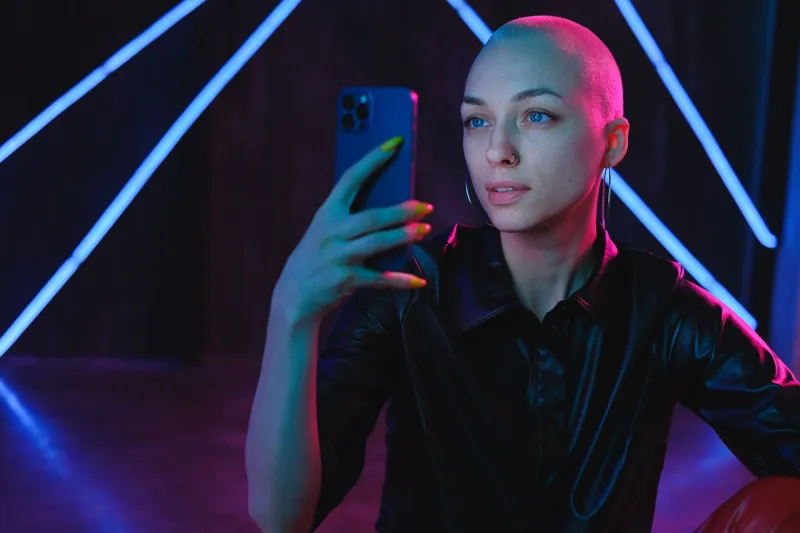
Photo by Photo by T on Unsplash on Unsplash
There's a particular kind of pain that hits when you're three years into building something and it still feels like nothing. You open Instagram, you watch someone's "how I got started" Reel, and within forty seconds you're convinced you're doing everything wrong. Their beginning looked so clean. So intentional. Like they always knew.
Yours? Yours looks like a Google Doc full of half-finished ideas, a camera you bought on sale that you barely know how to use, and a Tuesday night where you almost quit.
Here's the thing nobody tells you: their beginning didn't look like that either. You're just seeing the version they decided to remember.
Origin Stories Are Always Fiction — At Least a Little
Human beings are wired for narrative. We need our experiences to make sense, and the most satisfying stories have a clear beginning that logically leads to where we are now. So when a creator sits down to tell their origin story, they unconsciously — sometimes very consciously — reverse-engineer it. They start with who they became and work backward, selecting only the moments that feel relevant.
The three years of bad work? Skipped. The part-time job at Target that funded the camera? Mentioned once, maybe, in a "lol I was broke" aside. The mentor who gave them their first real break because they happened to be in the same city? Rarely credited.
What's left is a story that sounds like destiny. And destiny is deeply, deeply unfair to anyone still in the messy middle.
Social media makes this so much worse because it doesn't just amplify these edited stories — it rewards them. The cleaner the narrative arc, the more shareable it is. "I started with nothing and built this" performs better than "I started with nothing, then had something, then lost it, then pivoted four times, then got lucky, then worked really hard, and honestly it was kind of random." The second one is almost always closer to the truth.
What the 'Messy Middle' Actually Looks Like
I've been thinking a lot about what gets erased from creative origin stories, and it's almost always the same stuff.
The financial reality gets softened or dropped entirely. Someone might say they "hustled" to make it work, but rarely do they say: I had $400 in my bank account, I borrowed equipment from a friend, and I didn't pay myself for two years. That specificity feels too vulnerable, too close. So it gets smoothed over.
The external advantages disappear too. A college degree from a school with industry connections. A parent who worked in a related field. A city that gave them proximity to opportunities most people have to manufacture from scratch. These things aren't shameful — but they do complicate the "I did it alone" narrative, so they get minimized.
And the failure chapters get compressed. What actually took eighteen months of dead-end attempts gets summarized as "it took a while to find my direction." Which, technically, is true. But "a while" is doing a lot of heavy lifting there.
Why This Matters for How You See Yourself
When you compare your real, unedited experience to someone else's curated highlight reel, you're not making a fair comparison. You're comparing your raw footage to their final cut. And then you're concluding that you're behind.
This is where the comparison trap gets genuinely dangerous — not just uncomfortable, but creatively paralyzing. Because if you believe their starting point was that clear and that intentional, then your confusion feels like a character flaw. Your detours feel like failure. Your uncertainty feels like evidence that maybe you're not cut out for this.
None of that is true. It's just what happens when you mistake a story for a documentary.
A Different Way to Measure Where You Are
One of the most useful reframes I've found is this: instead of asking "why am I not where they are," ask "what was actually happening in their life at the same number of years in?"
Not years into their career as you know it. Years into their creative life, period — including all the stuff that didn't make it into the brand story. Because when you do that math honestly, the gap usually shrinks. Sometimes it disappears entirely. Sometimes you realize you're actually ahead.
Another thing worth doing: find the creators who are willing to be genuinely specific about their origin. Not just "it was hard" but how hard, in what ways, with what resources, in what city, with whose help. Those stories are rarer, but they're the ones that actually feel like company when you're struggling.
Your Starting Point Is Yours — That's Not a Limitation
Here's what I keep coming back to: your beginning, with all its chaos and detours and unglamorous details, is actually the most honest creative asset you have. It's specific. It's real. And the audience that will eventually find you isn't looking for someone who had it figured out from day one — they're looking for someone who gets it because they've actually lived it.
The polished origin story might get more saves. But the honest one builds real connection.
You're not behind. You're just not edited yet. And honestly? That's the better place to be making work from.