I Logged Off for 30 Days. Here's What the Silence Actually Taught Me.
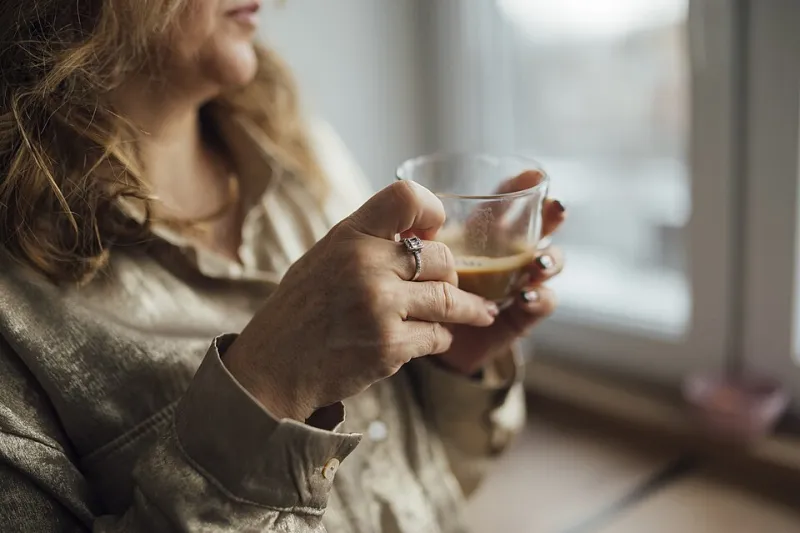
Photo: Shixart1985, CC BY 2.0, via Wikimedia Commons
The notification that broke me wasn't dramatic. It was a Tuesday afternoon, mid-March, and I was sitting in my car in a Trader Joe's parking lot, editing a caption for a post I didn't care about, for an audience I was too burned out to actually think about, while my groceries got warm in the back seat.
I posted it anyway. Got back on the highway. And somewhere around exit 14, I thought: what is actually happening to me.
That was the beginning of what I've since started calling my Digital Detox Diaries — thirty days away from every social platform I use professionally. No Instagram, no TikTok, no Twitter/X, no Pinterest, no Substack. Full stop.
I want to write about it honestly, because most "I took a break from social media" pieces I've read are either triumphant manifestos or cautionary tales, and the reality was neither. It was more complicated, more human, and ultimately more useful than either of those narratives.
The First Week: Withdrawal Is Real and It's Embarrassing
I'll just say it: the first five days were genuinely uncomfortable in a way that surprised me.
I kept reaching for my phone at the same intervals — after meals, during transitions, whenever a thought formed that felt shareable. My thumbs had a muscle memory I didn't know existed. I'd unlock my phone, navigate to where Instagram used to live (I'd moved all the apps into a folder on the second page), and just... stop. Every time, I had to make a conscious choice.
That alone was revelatory. How many times a day was I making that unconscious reach? Fifteen? Twenty? More? The fact that I couldn't answer that question with any certainty was its own kind of data.
The FOMO hit differently than I expected. It wasn't "what if something big happens and I miss it." It was more like a social anxiety — what if people forget I exist. Which, when I wrote it in my journal, looked as unhinged as it sounds. But I think it's an anxiety a lot of creators carry without naming it. The feed is proof of presence. Posting is a way of saying I'm still here. Going quiet feels like disappearing.
Spoiler: I did not disappear.
Week Two: The Boredom Started Getting Interesting
Around day ten, something shifted. The reflexive phone-reaching slowed down. I started filling those pockets of time — the in-between moments I'd been stuffing with content consumption — with actual sensory experience. Sounds pretentious, I know. Stay with me.
I started sketching again. Not for content, not for anything I planned to post — just in a cheap spiral notebook I'd had sitting on my shelf for eight months. The drawings were bad. They were exploratory and weird and I didn't show them to anyone. And they were some of the most fun I'd had making anything in recent memory.
I went to the Art Institute of Chicago on a Wednesday afternoon and stood in front of a Hopper painting for twenty minutes without taking a single photo. I cooked elaborate meals with music playing and no thought of documenting it. I read two full novels — actual physical books — in a week and a half.
None of this is revolutionary. But after years of experiencing almost everything through the lens of how will this translate, experiencing things for their own sake felt like a muscle I'd let atrophy. Stretching it again was both embarrassing (how had I let it get this bad?) and deeply satisfying.
Week Three: The Clarity I Didn't Ask For
The third week brought something I genuinely wasn't prepared for: clarity about what I actually want to make.
Without the constant input of other people's content, without the feedback loop of metrics and comments, I started hearing my own creative voice more clearly. And what it was saying was... not entirely what I'd been doing.
I'd been making content optimized for platforms rather than work rooted in what I actually cared about. Not entirely — I don't want to be dramatic — but more than I'd admitted to myself. The detox created enough distance to see it.
I filled pages of notes with ideas that felt genuinely mine. Projects I wanted to make with no guarantee they'd perform well. Directions I'd been avoiding because they didn't fit the content formats that were currently working. That notebook became something I still return to.
I also, importantly, thought a lot about the creator economy and my relationship to it. The structure of social media platforms is genuinely extractive in ways that are worth naming. The dopamine mechanics, the infinite scroll, the way engagement metrics become a proxy for self-worth — these are features, not bugs, of how these platforms are designed. Taking a month off didn't make me want to leave permanently, but it did make me want to engage with a lot more intentionality.
Week Four: Coming Home to Myself
By the final week, I'd stopped counting days. The detox had become just... my life. And it felt quieter in a good way. Less reactive. More present in conversations. More willing to sit with an idea for a few days before doing anything with it.
I also missed connection — genuinely. Not the metrics, not the validation, but the actual community I've built. The people who DM me about things that matter to them, the conversations that start in comments and go somewhere real. That part I missed, and that distinction felt important to hold onto.
What I Came Back With
Returning to platforms after thirty days was deliberate. I wrote out, before I logged back on, a set of principles for how I wanted to engage going forward. They're not rules — I'm not interested in policing myself — but intentions:
- Create before consuming. Every day, some form of making before any scrolling.
- Post when I have something to say, not on a schedule that serves the algorithm at the cost of my own creative rhythm.
- Metrics are information, not identity.
- Take breaks before I need them.
Has it been perfect since I came back? No. There are days I fall back into old patterns. But I have a reference point now — a month of what it feels like to exist outside the feed — and that reference point is genuinely useful.
The content I've made since the detox feels more like me. Whether that translates to better numbers, I honestly don't know yet. But it feels sustainable in a way the previous pace didn't. And sustainable is the whole point.
If you're a creator who's been feeling the particular kind of exhausted that no amount of sleep seems to fix, I'm not going to tell you to log off forever. I'm just going to say: the silence has things to tell you, if you're willing to sit in it long enough to listen.