Scroll Envy Is Real — And It's Quietly Suffocating Your Creativity
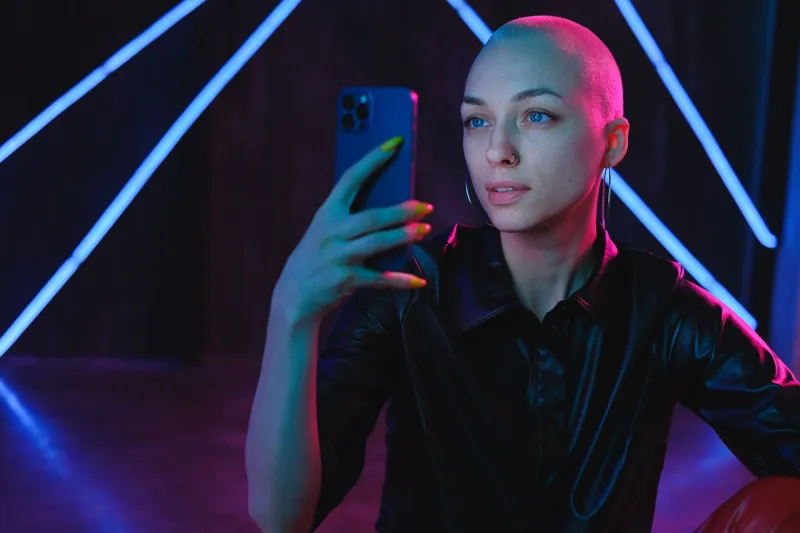
Let me paint you a picture. It's 11pm. You're sitting with a half-finished project you actually love — a painting, a draft, a video concept — and you pick up your phone for "just a second." Twenty minutes later, you're deep in someone else's launch announcement, their sold-out collection, their brand deal reveal. And suddenly the thing you were excited about five minutes ago feels... smaller. Dimmer. Like maybe it doesn't matter.
That's not inspiration. That's scroll envy. And it's one of the quietest creativity killers in the game right now.
Why the Algorithm Is Designed to Make You Feel Behind
Here's the thing nobody really talks about: social media feeds are not a neutral window into the creative world. They're a curated highlight reel, algorithmically optimized to show you the most engaging content — which, by design, tends to mean the most spectacular, the most successful, the most shareable.
What you're not seeing is the three years of low-engagement posts before the breakthrough. You're not seeing the projects that flopped, the collaborations that fell apart, the months where nothing clicked. The algorithm doesn't serve you the messy middle. It serves you the win. Over and over and over again.
So your brain, doing exactly what brains do, starts pattern-matching. It sees win after win after win and concludes: everyone is succeeding except me. Psychologists call this "social comparison theory" — we naturally measure our own progress against the people around us. But when the "people around us" is a carefully filtered feed of peak moments? That comparison becomes deeply, unfairly skewed.
The Specific Way It Messes With Your Art
Comparison doesn't just hurt your feelings. It actually changes how you create.
When you're constantly benchmarking your work against what's performing well in someone else's feed, you start unconsciously chasing their aesthetic, their format, their energy. You begin making decisions based on what got them 50,000 likes rather than what feels true to your own vision. Your art starts to drift. It becomes a reaction instead of an expression.
Worse, it can trigger what researchers call "creative paralysis" — that awful state where you have ideas but can't bring yourself to execute them because some part of your brain has already decided they won't measure up. You stop finishing things. You start second-guessing your voice. And the longer that cycle runs, the harder it becomes to remember what your actual instincts even sound like.
I've been there. Most creators have, even if they won't post about it.
Curating Your Creative Consumption (Without Going Full Hermit)
The answer isn't to delete everything and live off the grid. Community matters. Inspiration matters. Seeing other people's work can genuinely fuel your own when you're in the right headspace. The goal isn't isolation — it's intentionality.
Start by auditing your feed like it's your creative environment, because it literally is. Ask yourself: when I see this person's work, do I feel energized or deflated? Do I want to go make something, or do I want to close my laptop? Accounts that consistently leave you feeling inadequate are not "motivating" you — they're taxing you. Mute them without guilt.
Next, try separating your consumption time from your creation time. A lot of creators scroll while they're in the early stages of a project, when their confidence is most fragile. That's the worst possible moment to be absorbing other people's wins. Protect that window. Keep your phone across the room. Let your own ideas take up space before you let the internet in.
You can also deliberately seek out creators who share their process, not just their results. Behind-the-scenes content, work-in-progress posts, honest reflections on what didn't work — this kind of content recalibrates your perception of what a creative career actually looks like. It reminds you that everyone is figuring it out, just at different stages.
Redefining What "Making It" Even Means
A huge part of the comparison trap is operating on a success definition you never actually chose. Somewhere along the way, most of us absorbed this vague idea that "making it" looks like: big numbers, major brand deals, a certain kind of visibility. And because that definition is fuzzy and externally sourced, it's impossible to ever fully reach it. There's always someone with a bigger platform, a better deal, a more impressive trajectory.
The antidote is specificity. Get really, genuinely specific about what you want your creative life to look like — not what looks impressive in a caption, but what would actually feel good to wake up to. Is it financial stability doing work you believe in? Is it a small, engaged community that actually connects with your stuff? Is it creative freedom over everything? Write it down. Make it concrete.
When you have a clear, personal definition of success, other people's wins stop being a threat. You can celebrate them genuinely, because you're no longer in competition for the same prize.
Your Feed Is Not the Full Picture
Every creator you're comparing yourself to has a version of this exact essay living somewhere in their drafts. The ones who seem the most untouchable are often the most privately rattled by the same scroll-envy spiral. That's not comforting in a "misery loves company" way — it's comforting because it means you're not broken. You're just human, in a media environment that wasn't designed with your creative health in mind.
You're allowed to log off mid-scroll. You're allowed to mute the accounts that make you feel small. You're allowed to build something slowly, on your own terms, without performing urgency you don't feel.
Your art doesn't need to win the algorithm. It needs to be yours.