To Share or Not to Share: How Creators Are Navigating the Line Between Generosity and Giving Everything Away

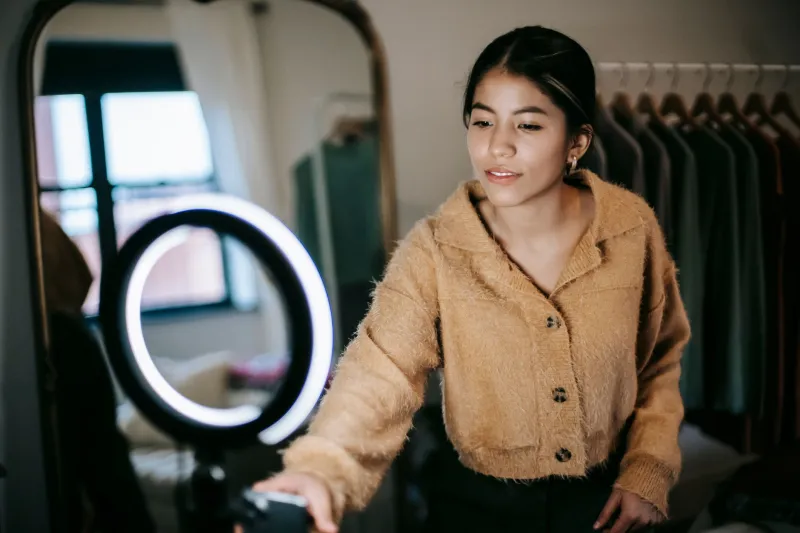
Photo by Photo by Vitaly Gariev on Unsplash on Unsplash
The first time someone slides into your DMs asking how you built what you built, it feels like a gift. Someone noticed. Someone wants to learn from you. That's the whole dream, right?
Then it happens again. And again. And one day you realize you've spent six hours in a week answering process questions for free, and the person who just launched their version of your concept — using everything you explained — has twice your following.
Welcome to one of the most uncomfortable conversations happening in the creator space right now: the line between generous and foolish, between community and competition, between teaching what you know and accidentally handing someone the keys to your house.
The Culture of Radical Transparency Has a Shadow Side
There's been a genuine, beautiful push in creative communities toward openness. Creators sharing their rates. Photographers posting their lighting setups. Designers breaking down their client process. This transparency has done real good — it's leveled playing fields, helped newcomers avoid predatory situations, and built trust between creators and audiences.
But somewhere in the mix, "be transparent" got conflated with "owe everyone everything." And those are not the same thing.
The pressure is especially intense for creators who've built platforms around education or process-sharing. If your brand is built on pulling back the curtain, where does the curtain end? What's behind it that's actually, legitimately, yours to keep?
This is a question with no clean answer — but it's one worth thinking through deliberately rather than reacting to in the moment.
What You're Actually Being Asked to Give
When someone asks a creator to share their "secrets," it's worth unpacking what that actually means. Because there are different categories of knowledge, and they don't all carry the same weight.
Tactical knowledge — the tools, the platforms, the posting schedules — is pretty low-stakes to share. This stuff is mostly Googleable, changes constantly, and sharing it builds goodwill without real cost.
Craft knowledge — the techniques, the aesthetic sensibility, the specific way you approach your medium — is more complex. It took longer to develop. It's more personal. Sharing it freely can be genuinely generous, but it can also mean watching someone replicate your work closely enough to blur the lines of originality.
Strategic knowledge — how you built your audience, your brand relationships, your revenue model — is where things get genuinely thorny. This is the stuff that took years and real risk to figure out. Sharing it has value. But sharing it without any kind of container (a course, a consulting relationship, a mentorship program) often means you're subsidizing someone else's shortcut with your own long road.
None of these categories are inherently off-limits. But treating them the same is a mistake a lot of creators make early on.
The Replication Problem Nobody Wants to Talk About
Here's the uncomfortable truth: not everyone asking for your knowledge is going to use it to do something different. Some of them are going to use it to do something very similar, in the same space, targeting the same audience.
That's not inherently wrong. Influence is influence. But it does mean that reflexive generosity — sharing everything because sharing is good — can sometimes work directly against you. Not always. Not even usually. But sometimes.
Creators who've thought this through tend to land in roughly the same place: share the principles, not always the playbook. Teach people how to think about the problem rather than handing them your exact solution. That approach is genuinely generous — arguably more generous, because it builds real capability — while keeping the specific, hard-won particulars of your process yours.
How the Calculus Shifts as Your Platform Grows
For most creators early on, sharing freely makes complete sense. You're building trust, establishing expertise, growing an audience that believes in you. The returns on openness are high and the risks are low because the stakes are low.
But as your platform grows, the math changes. The number of people receiving your knowledge increases. The proportion of them who might be direct competitors increases. And the value of what you've built — what you're essentially being asked to give away — increases too.
This is the moment a lot of creators start feeling the tension between who they want to be (generous, community-minded, accessible) and what actually makes sense for where they are. It can feel like a betrayal of your earlier, more open self. It isn't. It's just growth.
Monetizing your deeper knowledge — through workshops, courses, 1:1 consulting — isn't gatekeeping. It's sustainability. It's also, frankly, a signal that what you know is worth something. That's not something to apologize for.
Finding Your Own Line
The creators who seem to navigate this best aren't the ones who've found the objectively correct answer — there isn't one. They're the ones who've thought about it clearly enough to have an actual position, rather than defaulting to either extreme.
They know what they share freely and why. They know what they charge for and why. They know what they keep private and why. And when someone pushes back — "why won't you just tell me?" — they're okay with that discomfort, because they've already done the work of deciding.
You don't owe anyone your entire process. Generosity is a value, not an obligation. And the most sustainable version of sharing is the one that doesn't quietly hollow you out while you're doing it.