Your Vibe Is a Business Plan: How to Build a Personal Brand That Actually Feels Like You

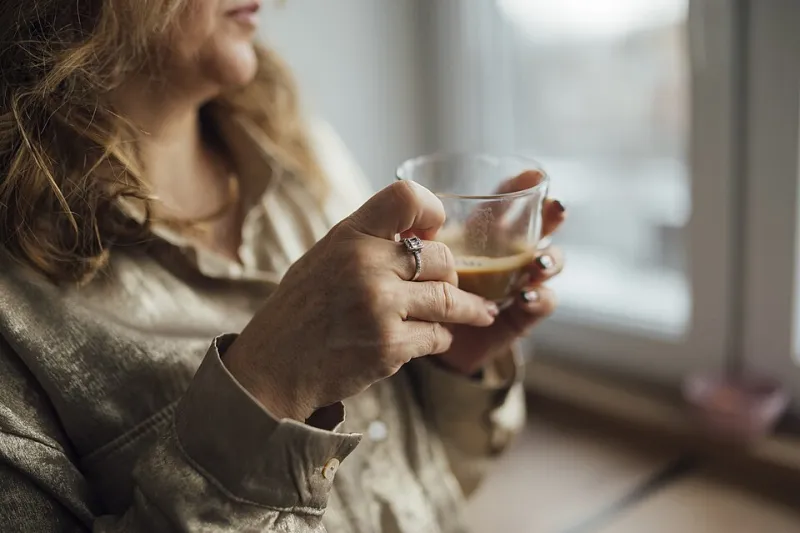
Photo: Phidev74, CC BY-SA 4.0, via Wikimedia Commons
Let's be real for a second. When you scroll past someone's content and immediately feel something — that warm recognition, that pull to hit follow — you're not responding to their ring light setup or their editing software. You're responding to them. Their specific frequency. Their vibe.
And here's the thing nobody tells you when you're starting out: that vibe? It's worth more than any viral moment, any trending audio, any algorithm hack you'll find in a YouTube tutorial at 2am.
I've been thinking a lot about this lately, especially watching how the creator landscape has shifted over the past few years. The people who are building genuinely sustainable careers — the ones still standing after three algorithm changes and two platform pivots — all share one thing. They knew exactly what they were about before they ever asked anyone else to care.
What Even Is a "Vibe" in Brand Terms?
Okay, let's get a little nerdy here, because I think the word "vibe" gets tossed around so casually that it loses its actual weight.
Your vibe, in branding terms, is the emotional signature your work leaves behind. It's the feeling someone carries with them after they close your app. Are they energized? Comforted? Challenged? Seen? That residual feeling is your brand doing its job.
Psychologists who study parasocial relationships — the one-sided bonds audiences form with creators — consistently find that people don't follow creators because they're impressive. They follow them because they feel known by them. There's a sense of shared worldview, shared taste, shared weirdness. The creator feels like someone the audience would actually want to grab coffee with.
That's not manufactured. That's authenticity doing the heavy lifting.
Real Talk: The Creators Who Got This Right
Look at someone like Mitski — not a social media creator in the traditional sense, but one of the most compelling personal brands in contemporary music. She's built an entire aesthetic universe around emotional rawness and literary specificity, and her audience is obsessive in the best way. She didn't chase trends. She dug deeper into her own strange corner of feeling, and people came running.
On the digital side, think about creators like Emma Chamberlain, who built a following not by being polished but by being conspicuously unpolished at a time when everyone else was airbrushing their lives. Her vibe — self-deprecating, genuinely curious, a little chaotic — became a brand that eventually landed her a Vogue partnership and her own coffee company. That's not luck. That's a clearly defined energy executed consistently over time.
Or consider visual artists who've built massive audiences on Instagram and TikTok not by following what was popular, but by going deeper into their own obsessions. The creators who document their sketchbooks, their failures, their half-finished canvases — they're building trust through transparency. And trust is the actual currency of the creator economy.
Finding Your Core Frequency
So how do you actually identify your vibe before you can leverage it? Here's where it gets introspective, and I won't apologize for that.
Ask yourself three questions:
- What would you make if literally no one was watching? Not what you think you'd make — what you'd actually make at midnight with no audience and no pressure.
- What do people consistently come to you about, even in your offline life? What do your friends say you're the person for?
- What kind of content do you consume voraciously, not for research but for pure joy?
The overlap in those three answers? That's your frequency. That's the signal worth broadcasting.
I also love the exercise of pulling five adjectives you'd want someone to use when describing your work to a friend. Not adjectives about you as a person necessarily, but about the experience of your work. Warm. Cerebral. Irreverent. Lush. Grounding. Pick yours and let them become a filter for every creative decision you make.
Translating Vibe Into Strategy (Without Killing the Magic)
Here's where a lot of creators get tripped up. They find their vibe, and then they immediately try to systematize it into oblivion. They create content calendars so rigid they stop feeling anything when they make stuff. The vibe dies in the spreadsheet.
The goal is to build structures that protect your authenticity, not ones that replace it.
Practically, that looks like:
Consistency in aesthetic, not in formula. Your color palette, your editing style, your voice — these can stay consistent even when your content format shifts. Vibe lives in the details.
Platform fit, not platform mimicry. Your energy should translate across platforms, but you don't have to perform the same way everywhere. Instagram might get your polished work; TikTok might get your process; Substack might get your longer, messier thoughts. Same vibe, different expression.
Saying no as a brand strategy. Every collaboration you take that doesn't fit your energy dilutes the signal. Every trend you chase that feels wrong to you confuses your audience. "No" is a curation tool.
The Long Game
Building a personal brand around your authentic vibe is genuinely a long game, and I want to be honest about that. It's slower than going viral for a trend you don't actually care about. It requires more self-awareness than copying what's working for someone else.
But the shelf life is incomparably longer. Trends expire. Algorithms shift. Platforms come and go. What doesn't expire is a clearly defined creative identity that your audience has genuinely bought into.
The creators who will still be here in ten years aren't the ones optimizing hardest for this quarter's algorithm. They're the ones building something real enough that their audience would follow them anywhere — to a new platform, a new medium, a new chapter.
Your vibe isn't just your aesthetic. It's your career infrastructure. Treat it that way.